
Re:Engage
MARKETING STRATEGY:
Omnichannel Is No Longer a Strategy. It’s the Operating Model for Modern Marketing
By Marie Aiello, President, ContinuumGlobal


Recent Posts
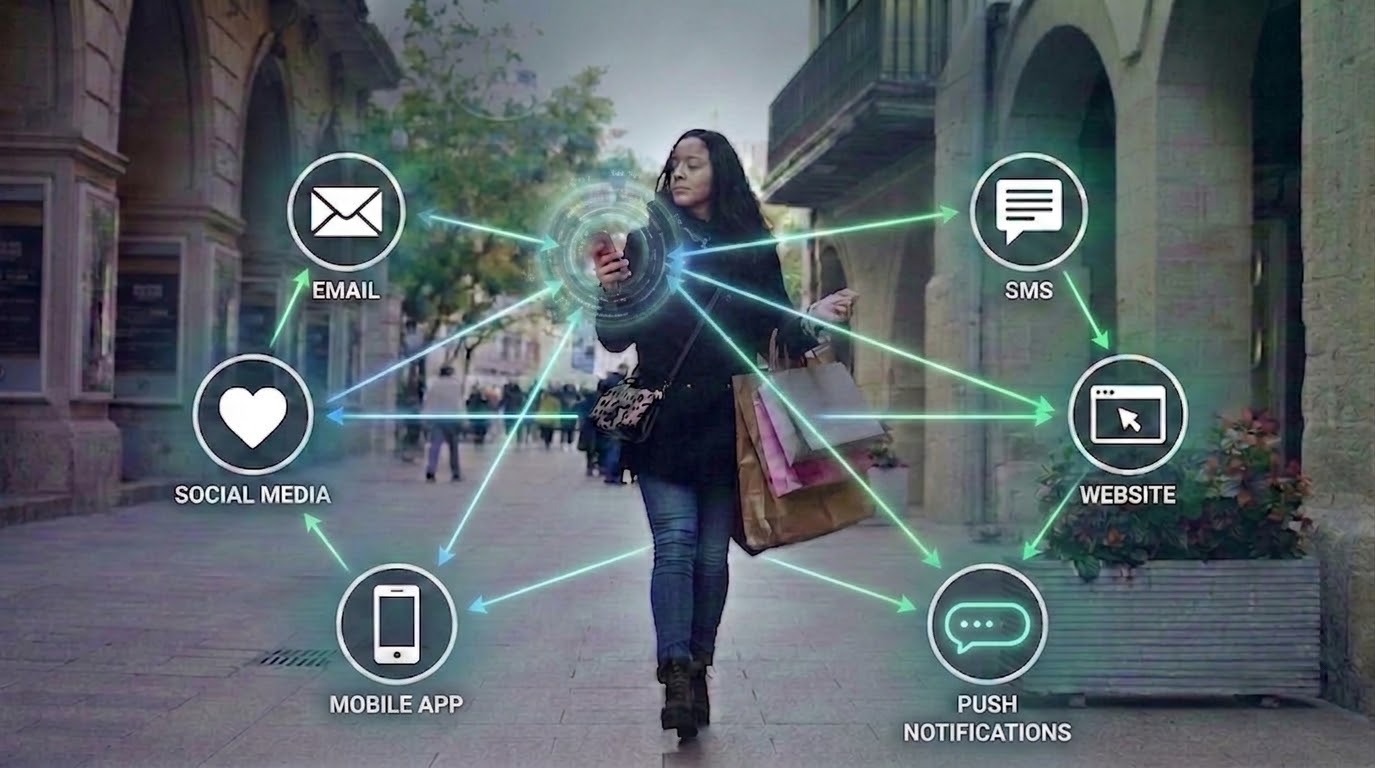
Omnichannel was once discussed as a future state. That future has arrived. Customers no longer move in predictable paths bound by individual channels. In fact, 91% of retail customers engage with retailers in multiple formats. These journeys unfold fluidly across social, search, email, web, mobile, streaming, and physical environments, blending and intersecting into a single, continuous experience where the concept of a primary channel has largely disappeared.
In this reality, omnichannel is no longer just a strategic initiative to consider following. It’s the operating environment where marketing must function to win with the modern consumer.
But while customers have fully embraced omnichannel, most marketing organizations are slower to adopt. In my experience, teams tend to remain structured by channel and discipline:
- Creative is still produced within channel specific workflows, resulting in disjointed messaging;
- Execution is siloed by channel, requiring extensive staffing with niche expertise to reach each channel; and
- Segmentation often exists in data systems, but fails to translate into meaningful variation in messaging.
The result is a familiar tension for leaders. The demand for omnichannel content continues to accelerate, while the time, cost, and operational complexity required to deliver it also rise just as quickly.
This gap between how customers experience brands and how marketing organizations operate is becoming one of the defining leadership challenges in modern marketing. But it doesn’t need to be a constant struggle.
From Channel Presence to Experience Orchestration
Early stage omnichannel efforts focused on presence. Brands worked to build visibility across email, web, social, paid media, and physical environments. Success meant showing up everywhere customers might be.
Today, presence across all channels is table stakes – everyone is present, or they’re already majorly missing out. The true differentiator now is orchestration.
Experience orchestration requires consistency of message, continuity of context, and relevance to the individual regardless of where engagement begins or ends. Customers don’t perceive channels as separate interactions. They experience a single, ongoing relationship with a brand. When messaging conflicts, resets, or feels generic, trust erodes quickly. This is true no matter what type of brand you are. Without clear, consistent messaging, trust is easily lost.
Delivering orchestration demands more than coordination between channel owners. My team has identified what it requires – a structural shift in how marketing is planned, created, and executed. Strategy must begin with the customer journey rather than the channel plan. Creative must be designed for adaptation rather than one time deployment. Data and segmentation must inform messaging dynamically, not retrospectively. Increasingly, this orchestration is enabled by AI embedded directly into planning, creation, and governance workflows.
Omnichannel is no longer about channel presence; it’s the operating system of marketing execution.
The Rising Expectation of Hyper Personalization at Scale
At the same time orchestration is becoming essential, another force is reshaping the landscape: hyper-personalization.
Customers increasingly expect experiences that reflect their behaviors, preferences, and stage in the relationship. Personalization has been shown to reduce customer acquisition costs by as much as 50 percent, lift revenues by 5 to 15 percent, and increase marketing ROI by 10 to 30 percent. But at the same time, 61% of customers believe they’re treated more like a number than an individual. Generic messaging is no longer simply ineffective; it signals a deeper disconnect in how a brand understands and engages its audience. Consider the experience of a devoted Packers fan being promoted Bears merchandise, a sports car enthusiast receiving updates about heavy-duty trucks, or a customer repeatedly served ads for a product they already purchased. These moments may seem small, but together they create a clear impression that the brand isn’t truly paying attention. Over time, that perception erodes trust and weakens the relationship in ways that are difficult to recover.
However, meaningful personalization introduces a scale challenge, and 63% of digital marketing leaders struggle with delivering personalized experiences. Audience segments continue to expand. Channels continue to multiply. The volume of creative required grows exponentially.
Only recently have AI driven content generation and decisioning made this level of personalization operationally achievable at scale.
Hyper personalization is not just a data challenge. It’s a content, workflow, and operating model challenge.
Disconnected Teams Produce Fragmented Campaigns
Organizational structure remains one of the most persistent barriers to true omnichannel execution.
Channel-based teams made sense in an earlier era when platforms required distinct expertise, production processes, and performance management. Over time, however, these structures created silos that are increasingly misaligned with customer behavior.
When planning and execution occur independently across teams, messaging is disjointed, creative is duplicated or inconsistently adapted, timelines extend as coordination becomes manual, segmentation fails to reach execution, and measurement reflects channel performance rather than customer experience.
The outcome is fragmentation, both operational and experiential.
Many organizations attempt to solve this through governance layers, additional meetings, or expanded approval processes. However, these approaches rarely address the root cause: the underlying workflow was never designed for orchestration or scaled personalization.
AI Enables Executable Omnichannel
This is how AI becomes materially different from previous waves of marketing technology.
Earlier innovations improved targeting, automation, or analytics. AI introduces the ability to transform how creative and messaging are generated, adapted, and governed across channels and audience segments.
Applied thoughtfully, AI can enable organizations to begin with a unified strategic brief rather than channel-specific requests. From there, it can generate cohesive variations aligned to segmentation needs, maintain consistent brand voice and compliance across adaptations, dramatically compress production timelines while increasing relevance, and embed governance and performance alignment directly into daily workflows.
The significance of AI in this context is not efficiency alone. It moves true omnichannel orchestration from impossible to easily achievable.
In my personal experience working with tech companies trying to communicate thoughtfully with local business owners, AI can be an incredibly useful and time-saving tool when it’s used in an omnichannel manner. In one specific instance, a brand used AI to generate communications for in-app platforms in addition to through email. With just one simple brief, their marketing managers now get consistent, cohesive messaging that reaches their busy audiences both in the inbox and through in-app highlighted recommendations, saving time and energy. This is just one example of how I’ve seen AI drastically reduce time spent on marketing processes, while still ensuring that all channels uphold brand guidelines.
For the first time, marketing organizations have access to capabilities that can support the scale of variation required for true omnichannel personalization without proportionally increasing cost or complexity. This shifts omnichannel from aspiration to execution.
What an Omnichannel Operating Model Requires from Leaders
Technology by itself does not create transformation. Sustainable progress depends on leadership decisions about operating model, governance, and culture.
Through research, conversations with marketing leaders, and observation of customers, I’ve identified several shifts that are emerging as essential:
- Strategy must begin with the customer journey, not the channel. Planning grounded in customer progression enables coherence across touchpoints and prevents fragmentation before it begins.
- Creative must be built for adaptation. Rather than producing isolated assets, teams must develop modular, flexible content capable of evolving across audiences and environments while preserving intent and brand integrity.
- Segmentation must connect directly to execution. Audience intelligence only creates value when it shapes real customer interactions. Bridging data and creative is now a central responsibility of leaders.
- Governance must be embedded rather than layered on. As personalization scales, manual review processes become bottlenecks. Governance models must evolve alongside production models.
- AI adoption must be operational, not experimental. Pilot programs generate insight, but enduring value comes from integrating AI into everyday marketing workflows.
Together, these shifts define the transition from omnichannel ambition to omnichannel reality.
The Future of Marketing Is Cohesion at Scale
Looking ahead, the defining capability of leading marketing organizations will not be presence in every channel or access to more data. It will be the ability to deliver coherent, relevant experiences across an increasingly complex landscape.
Achieving this requires unifying three domains that have historically operated separately: Customer understanding. Creative production. Channel execution.
AI is accelerating the convergence of these domains, but leadership vision determines whether that acceleration produces fragmentation or orchestration.
Organizations that succeed will treat omnichannel not as a campaign strategy, but as the foundation of how marketing operates. They will design workflows that enable personalization without chaos, scale without inconsistency, and speed without sacrificing brand integrity.
Most importantly, they will recognize a simple truth customers already experience every day. The journey is continuous. Marketing must finally operate in the same way.